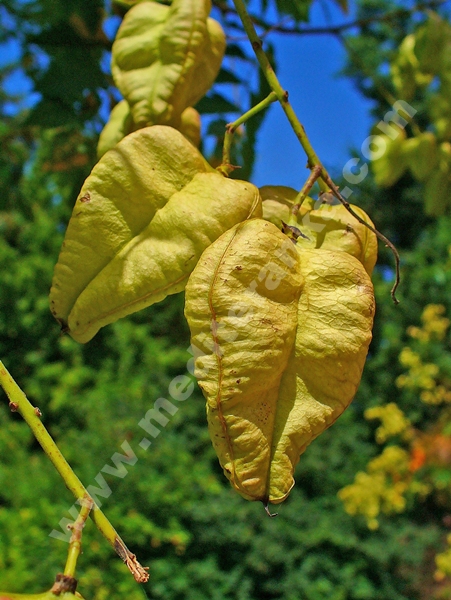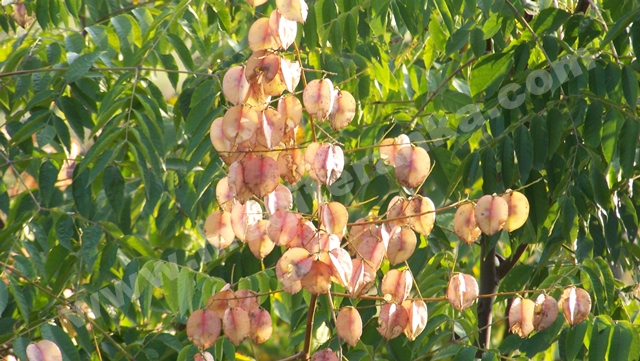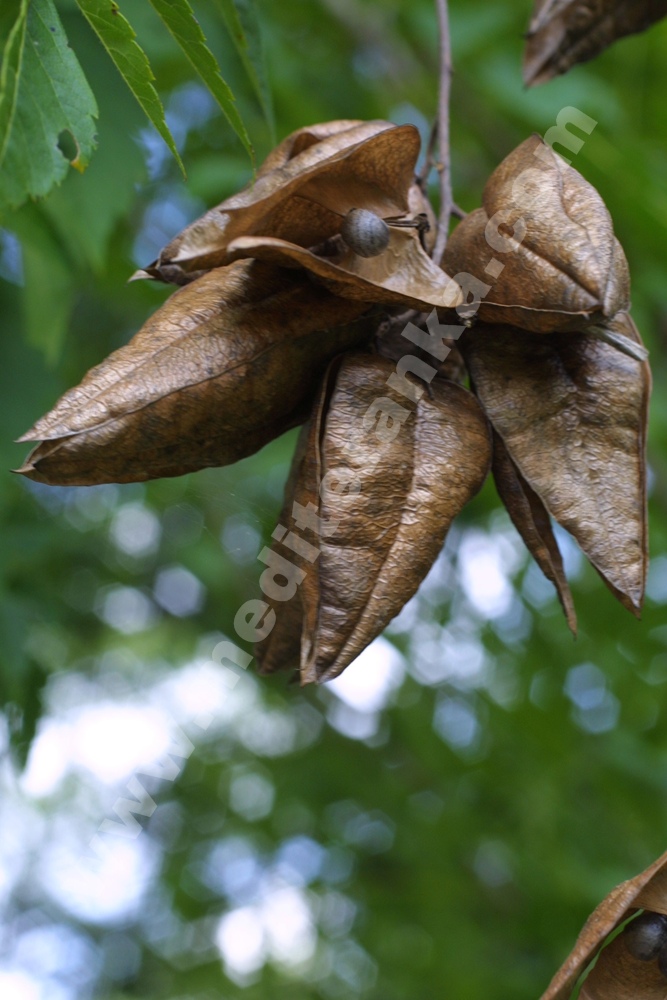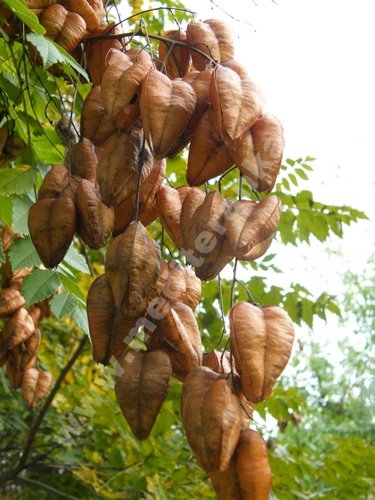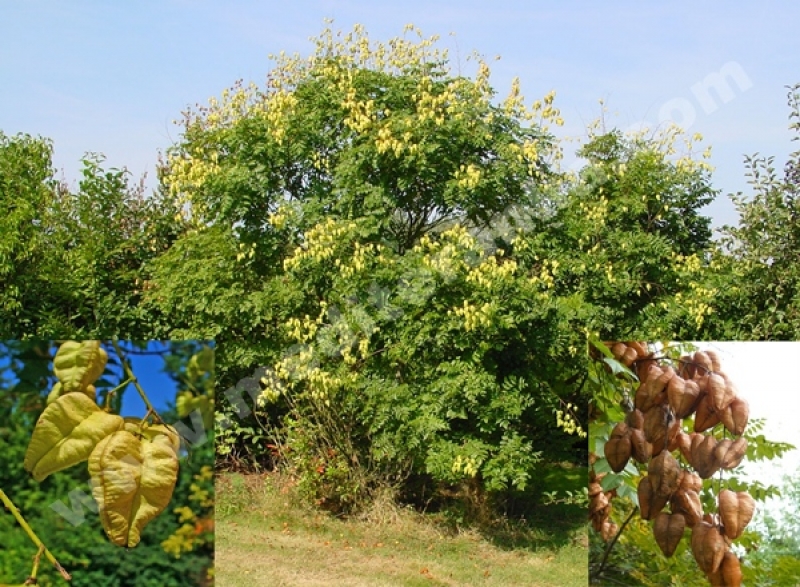
Goldenrain tree (Koelreuteria paniculata) is a species of flowering plant in the family Sapindaceae, native to eastern Asia, in China and Korea. Common names include Pride of India, China tree, or Varnish tree. It is a small to medium-sized deciduous tree growing to 7-10 m tall, with a broad, dome-shaped crown. The leaves are pinnate, 15–40 cm long. The flowers are yellow, growing in large terminal panicles 20–40 cm long. The fruit is a three-parted inflated bladderlike pod 3–6 cm long, green ripening orange to pink in autumn, containing several dark brown to black seeds.
It is popularly grown as an ornamental tree in temperate regions all across the world because of the aesthetic appeal of its flowers, leaves and seed pods. The seeds are edible when roasted, but not commonly consumed.
The leaves turn yellow before falling. The bark is light gray-brown and becomes furrowed with age. Golden rain tree is perhaps most striking in the fall with its large clusters of showy yellow flowers. These are followed by red-purple seed pods, which are equally dramatic! The fruit is a papery three-compartment, bladder-like structure full of seeds. In warm climates seed is produced in great quantities and there are always seedlings beneath a mother tree. The tree is invasive under these conditions. Golden rain tree is best grown in cooler zones where the shorter growing season prevents formation of seed. Golden rain tree is quite adaptable to most soil conditions. It does best in loose, well drained soil with good watering, especially when young. It tolerates drought, alkaline soil, heat, wind, and air pollution. Prune crossing branches as needed during winter when dormant. In cooler zones, use as a free-standing tree where it can be seen in all its glory! It is also good as a small shade tree where space is limited.
Golden rain tree should be used more often as a street and park tree, it is a fast grower that can produce welcome shade and beauty for new homes in quick order. The cheerful, bright yellow flowers are unique and segue into the even more ornamental seed pods.