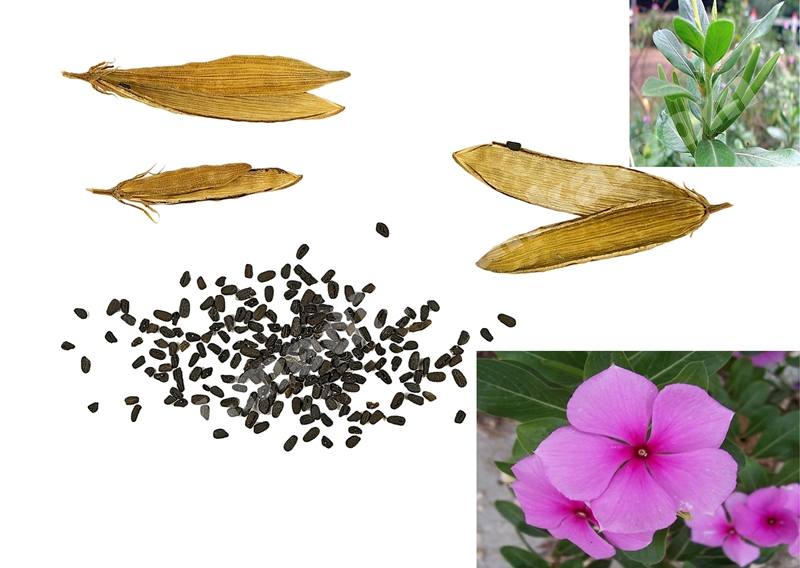
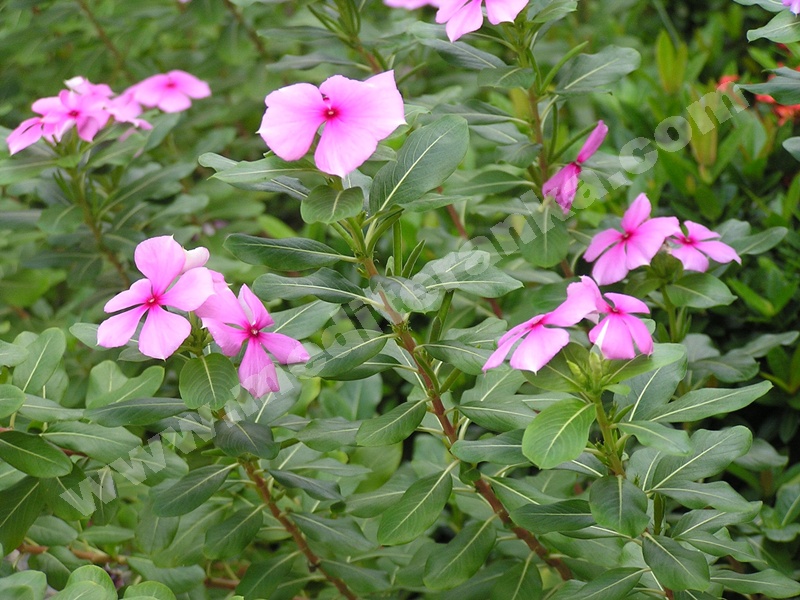
Catharanthus roseus, commonly known as the Madagascar periwinkle, is a species of Catharanthus native and endemic to Madagascar. Other English names occasionally used include Cape periwinkle, rose periwinkle, rosy periwinkle, and "old-maid". It is an evergreen subshrub or herbaceous plant growing to 1 m tall. The leaves are oval to oblong, 2.5–9 cm long, glossy green, hairless. The flowers are white to dark pink with a darker red centre, with five petal-like lobes. The fruit is a pair of follicles 2–4 cm long. In the wild, it is an endangered plant, the main cause of decline is habitat destruction by slash and burn agriculture. It is also however widely cultivated and is naturalised in subtropical and tropical areas of the world. The species has long been cultivated for herbal medicine and as an ornamental plant.
In Ayurveda (Indian traditional medicine) the extracts of its roots and shoots, though poisonous, is used against several diseases. In traditional Chinese medicine, extracts from it have been used against numerous diseases, including diabetes, malaria, and Hodgkin's lymphoma. The substances vinblastine and vincristine extracted from the plant are used in the treatment of leukemia. It can be dangerous if consumed orally. It can be extremely toxic. As an ornamental plant, it is appreciated for its hardiness in dry and nutritionally deficient conditions, popular in subtropical gardens where temperatures never fall below 5 °C to 7 °C, and as a warm-season bedding plant in temperate gardens. It is noted for its long flowering period, throughout the year in tropical conditions, and from spring to late autumn, in warm temperate climates. Full sun and well-drained soil are preferred.