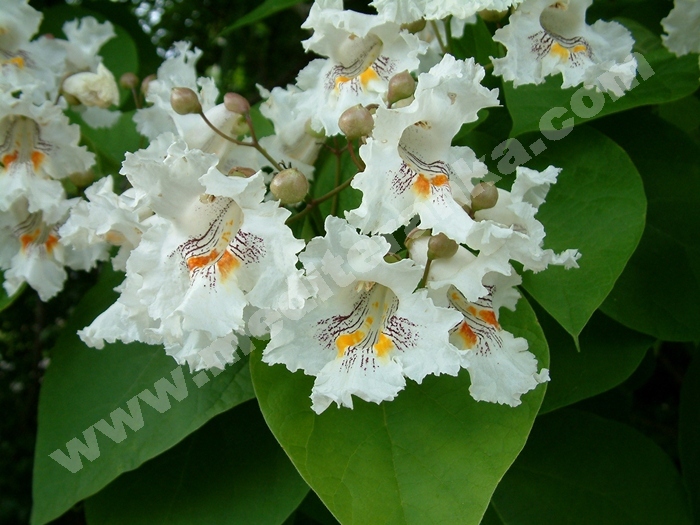
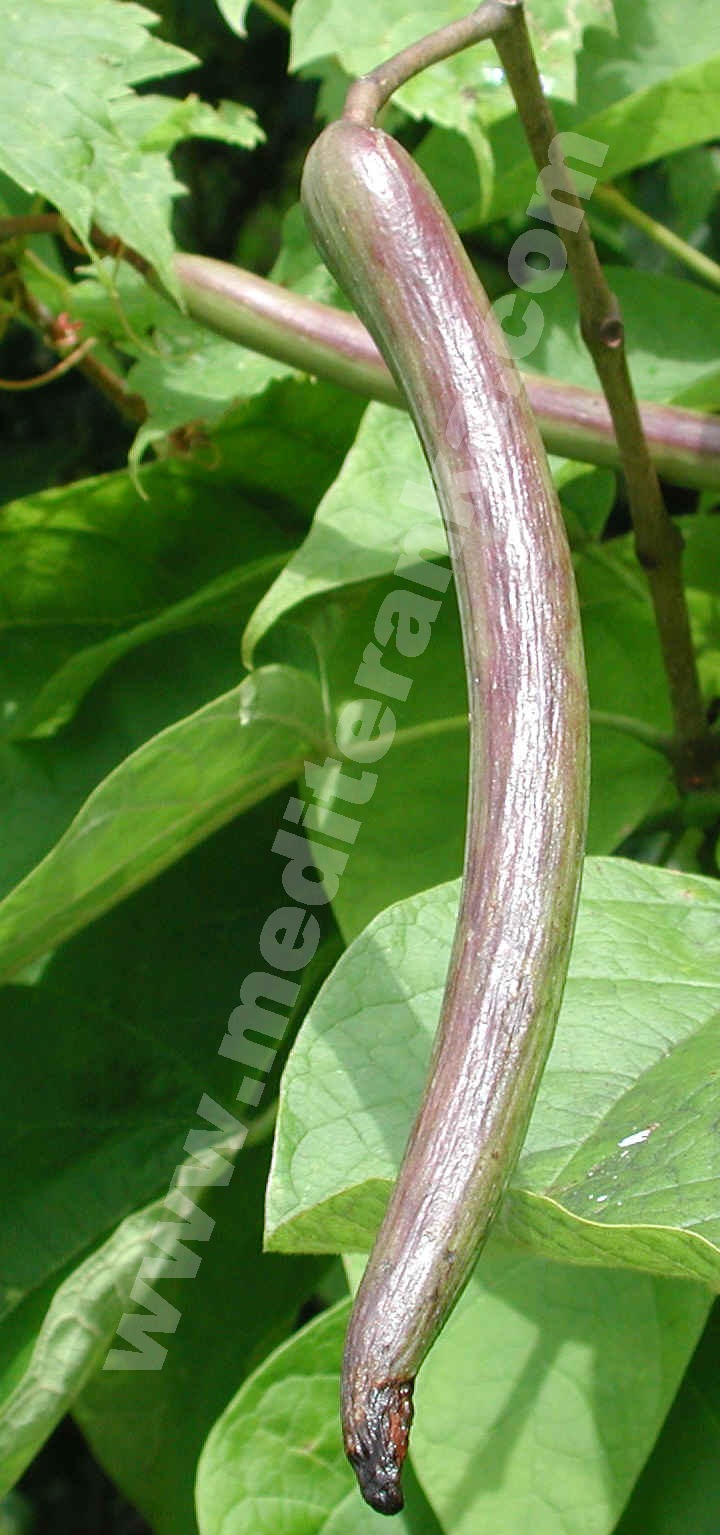
Catalpas (Catalpa bignonioides) are mostly deciduous trees, they typically grow to 12–18 metres tall and 6–12 metres wide. They can be recognized by their large, heart-shaped leaves, showy white or yellow flowers and during the autumn by their 20–50 centimetres long fruits, which resemble a slender bean pod, containing numerous small flat seeds. Due to their large leaf size, catalpas provide very dark shade and are a popular habitat for many birds, providing them good shelter from rain and wind.
These trees have very little limb droppage, but drop large, dark brown bean pods during late summer. The wood of catalpas is quite soft. The tree is the sole source of food for the catalpa sphinx moth, the leaves being eaten by the caterpillars. When caterpillars are numerous, infested trees may be completely defoliated. Defoliated catalpas produce new leaves readily, but with multiple generations occurring, new foliage may be consumed by subsequent broods. Severe defoliation over several consecutive years can cause death of trees. Because the caterpillars are an excellent live bait for fishing, some dedicated anglers plant catalpa mini-orchards for their own private source of "catalpa-worms".