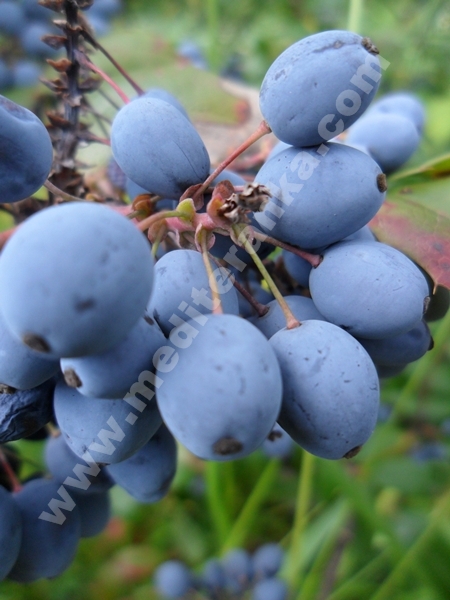
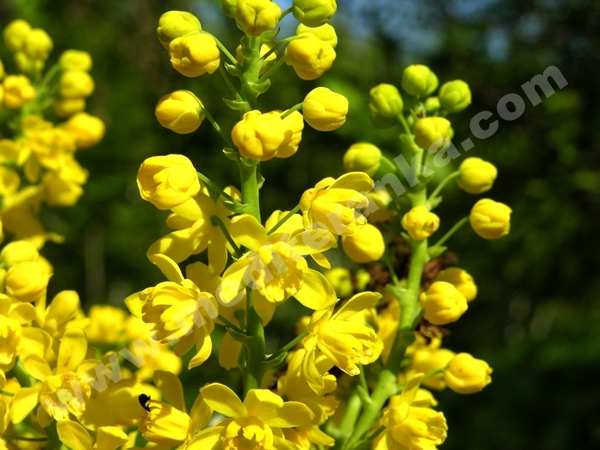
Oregon grape (Mahonia aquifolium) is a species of flowering plant in the family Berberidaceae, native to western North America. It is an evergreen shrub growing to 1 m tall by 1.5 m wide, with pinnate leaves consisting of spiny leaflets, and dense clusters of yellow flowers in early spring, followed by black berries.
The specific epithet aquifolium means "holly-leaved", referring to the spiny foliage. Some authors place Mahonia in the barberry genus, Berberis. The Oregon-grape is not related to true grapes, but gets its name from the purple clusters of berries whose color and slightly dusted appearance are reminiscent of grapes.
Mahonia aquifolium is a native plant on the North American west coast from Southeast Alaska to Northern California. In some areas outside its native range, M. aquifolium has been classified as an invasive exotic species that may displace native vegetation.
M. aquifolium is a popular subject in shady or woodland plantings. It is valued for its striking foliage and flowers, which often appear before those of other shrubs. It is resistant to summer drought, tolerates poor soils, and does not create excessive leaf litter. Its berries attract birds.
The small purplish-black fruits, which are quite tart and contain large seeds, are included in smaller quantities in the traditional diets of Pacific Northwest aboriginal peoples, mixed with Salal or another sweeter fruit. Today they are sometimes used to make jelly, alone or mixed with salal. Oregon grape juice can be fermented to make wine, similar to European barberry wine folk traditions, although it requires an unusually high amount of sugar. Certain extracts from M. aquifolium may be useful in the treatment of inflammatory skin diseases such as eczema and psoriasis, although side effects include rash and a burning sensation when applied.