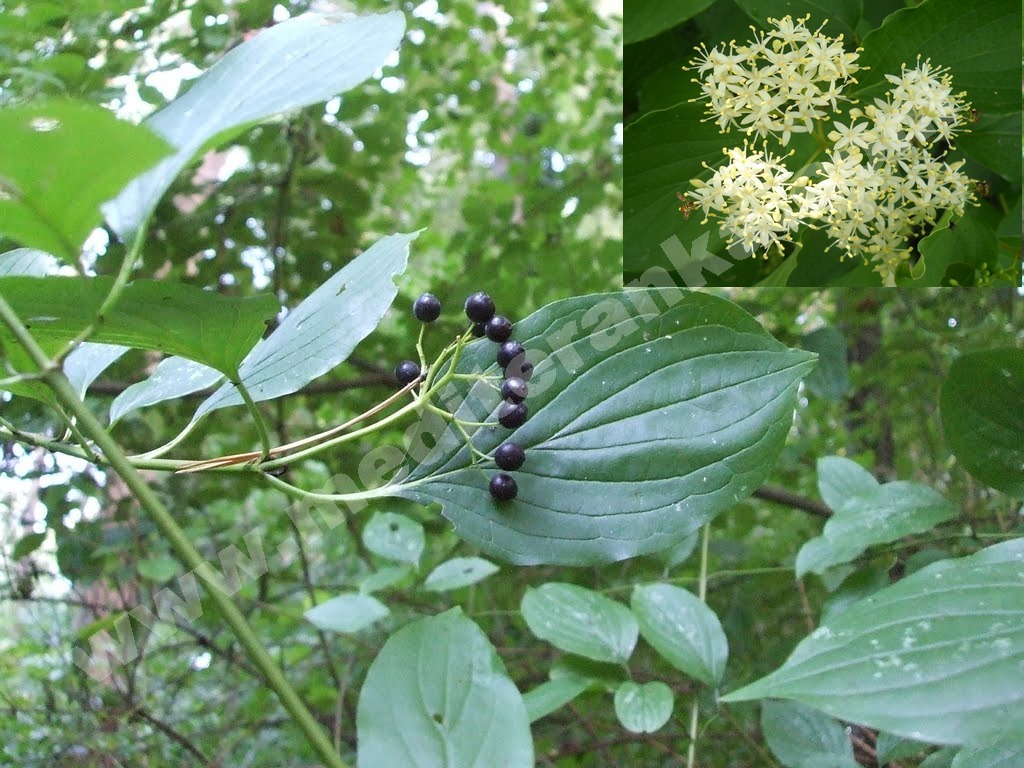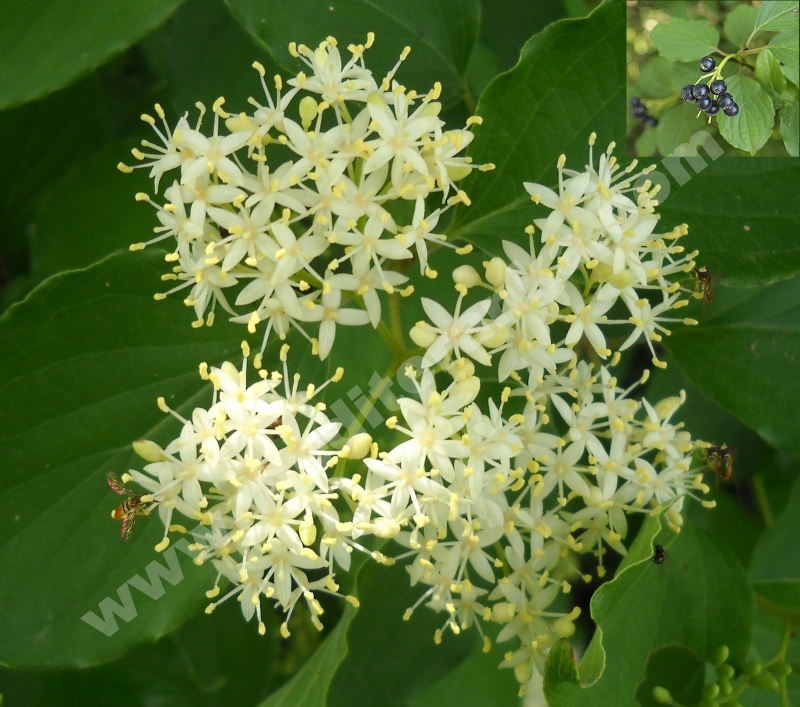
The Common Dogwood (Cornus sanguinea), is a species of dogwood native to most of Europe and western Asia. It is widely grown as an ornamental plant. It is a medium to large deciduous shrub, growing 2–6 metres tall. The leaves are opposite, 4–8 centimetres long, with an ovate shape and an entire margin. The hermaphrodite flowers are small, 5–10 millimetres and insect pollinated. The fruit is a globose black berry 5–8 millimetres diameter, containing a single seed. The berries are sometimes called "dogberries".
It prefers moderate warmth in sunny places, though it can tolerate shade and in the more southern areas of its distribution area grows in the mountains. It requires light, often alkaline soils. The species spreads by seeds and stolons. It is especially abundant in riversides, especially in shady areas and ravines. It grows in the margins of forests or unforested areas as woods in regeneration, prickly woodland fringes, with other thorny shrub species like Clematis vitalba (see my offer). It reproduces by seed and root sprouts, which makes it effective at occupying areas of land and forming dense groves. The leaves provide food for some animals. Dogberries are eaten by some mammals and many birds. Many frugivorous passerines find them irresistible, and prefer them over fruits grown by humans. The plant is thus often grown in organic gardening and permaculture to prevent harm to orchard crops, while benefitting from the fact that even frugivorous birds will hunt pest insects during the breeding season, as their young require much protein to grow. The straight woody shoots produced by the plant can be used as prods, skewers or arrows.