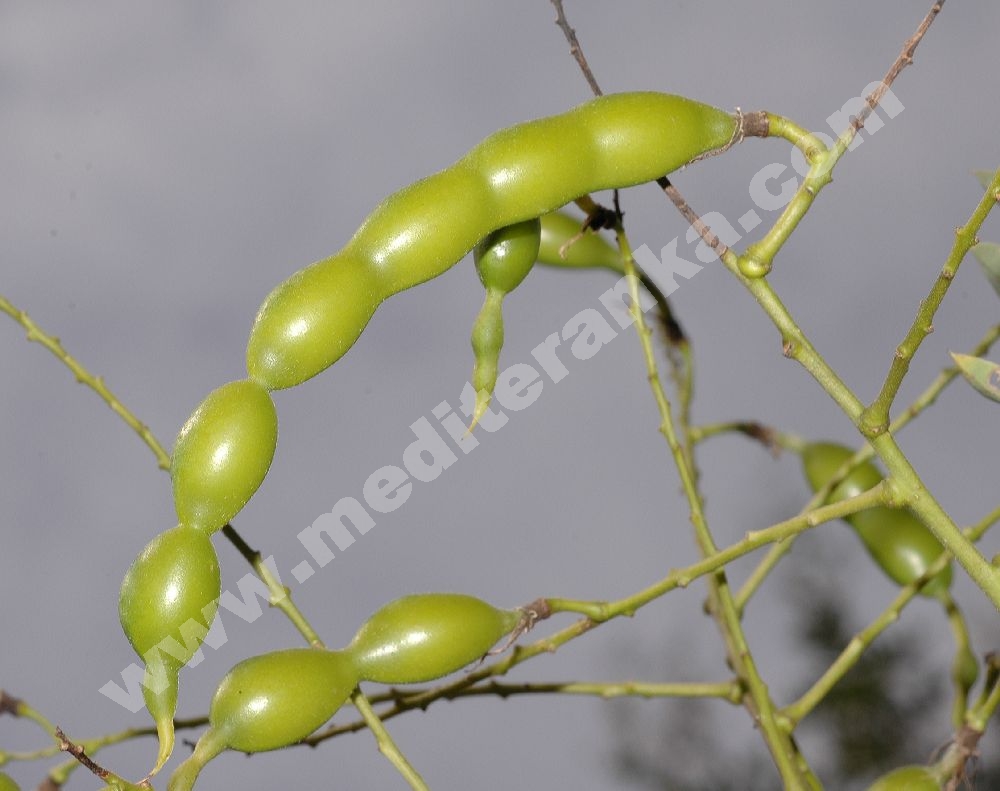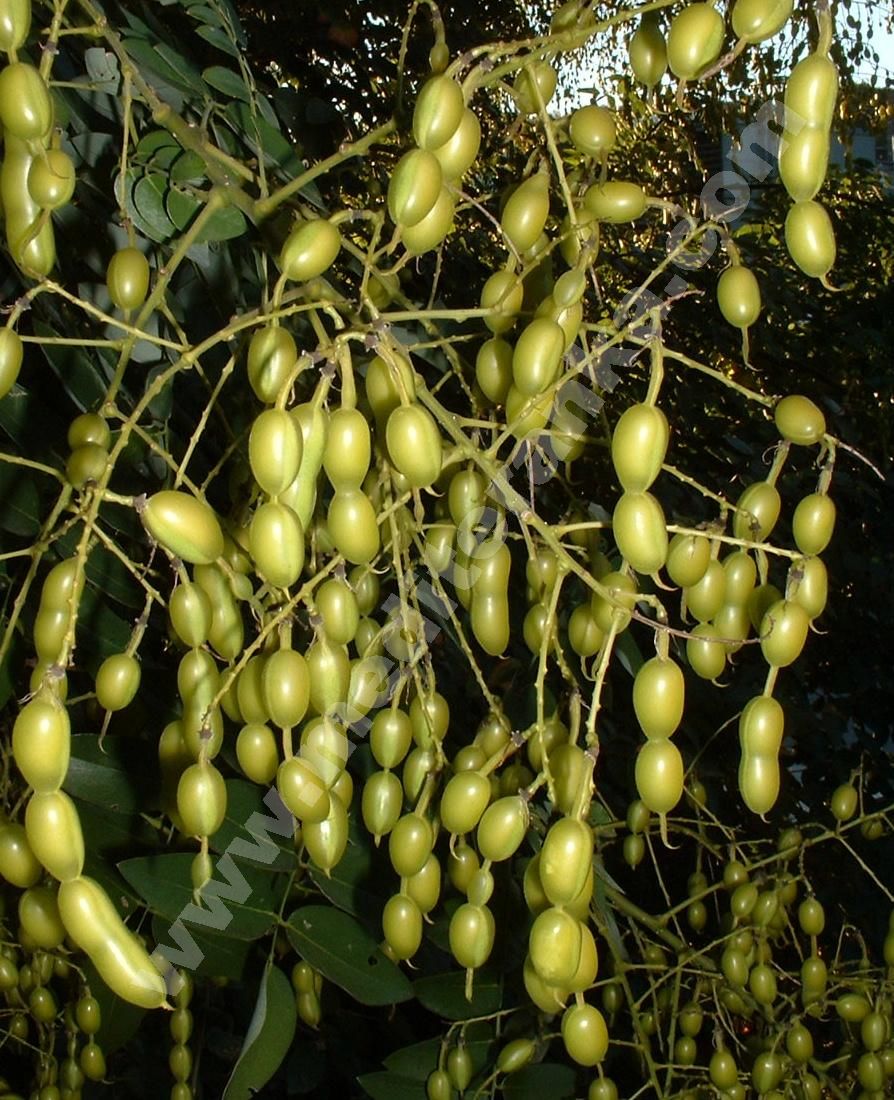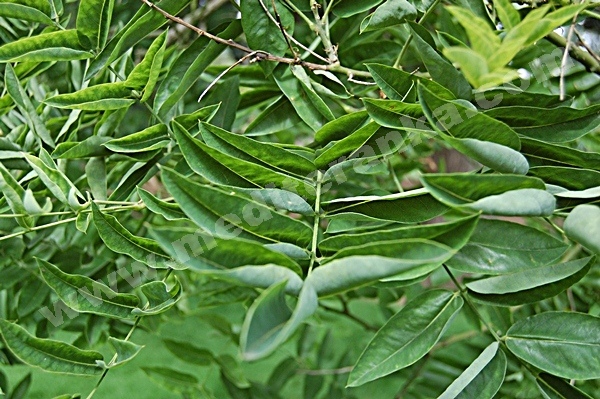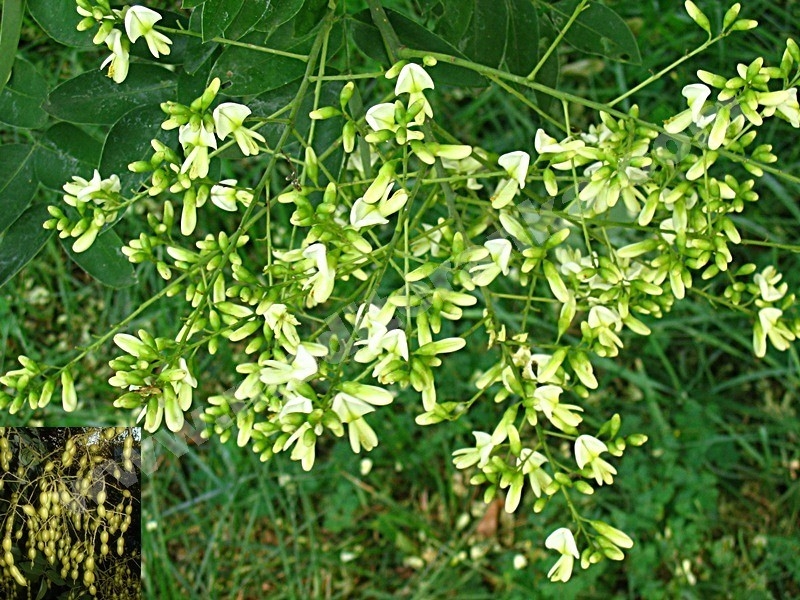
Styphnolobium japonicum, the Pagoda Tree (Chinese Scholar, Japanese pagodatree, syn. Sophora japonica) is a species of small tree or shrub in the subfamily Faboideae of the pea family Fabaceae. It was formerly included within a broader interpretation of the genus Sophora. The leaves are pinnate, with 9-21 leaflets, and the flowers in pendulous racemes similar to those of the Black locust.
Styphnolobium japonicum is native to eastern Asia (mainly China, despite the name), is a popular ornamental tree in Europe, North America and South Africa, grown for its white flowers, borne in late summer after most other flowering trees have long finished flowering. It grows into a lofty tree 10–20 m tall with an equal spread, and produces a fine, dark brown timber. S. japonicum is one of the 50 fundamental herbs used in traditional Chinese medicine. It has abortifacient, antibacterial, anticholesterolemic, antiinflammatory, antispasmodic, diuretic, emetic, emollient, febrifuge, hypotensive, purgative, styptic, and tonic properties.