- You are here:
-
Home

- Krunoslav Tripalo
Products Categories
Your Cart
Currency
Taxi Booking


Krunoslav Tripalo
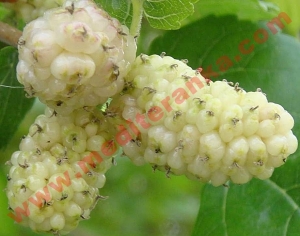
White mulberry
White Bhut Jolokia
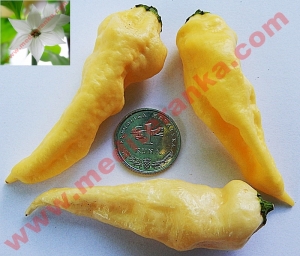
White Bhut Jolokia, also known as White Ghost Pepper looks spectacular. It grows like a normal Bhut and are a solid plant that gets to around a meter tall in the pot, in the ground it would get bigger to about meter and half tall. Fairly good producer for a bhut. The chilli pods are about 5 cm long and 2.5 cm wide that start off a light green and then go to a creamy white and are ripening white. Overall a spectacular chilli, that grows really well and looks stunning with the White pods. Tastes amazing and the heat is excellent.
Fatalii
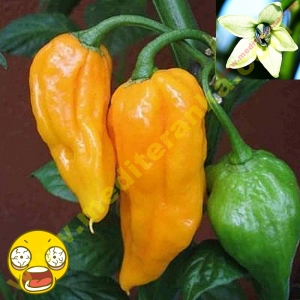
The Fatalii is a chili pepper of Capsicum chinense that originates in central and southern Africa. It is described to have a fruity, citrus flavor with a searing heat that is comparable to the standard habanero. Fatalii is the seventh hottest pepper, ranging 125,000–400,000 Scoville units. The plants typically grow 50–65 cm in height, but may reach 90 cm or taller under optimal growing conditions, and plant distance should be about the same. The pendant pods get 6.4-9 cm long and about 2-4 cm wide. From a pale green, they mature to a bright yellow. The Fatalii is known for its extreme heat and citrus flavor. As such, it makes for a hot sauce that usually comprises other citrus flavors. The walls of the peppers are very thin, making it very easy to dry. After drying, the peppers can be used as powders.
Bhut jolokia orange
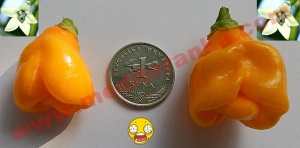
The Orange Bhut Jolokia (C. Chinense) is a stocky plant that grows to just under a meter in pot. It will probably grow bigger, if you plant it in the ground. A great producer of smooth orange pods and they are soft and squishy, when you bite. They look like elongated habaneros, but have that awesome Naga flavour and a ripper heat. The Orange Bhut Jolokia originates from north-eastern India. The “red” Bhut Jolokia was the world hottest chilli for years, and before that it was the Red Savina Habanero.
Aleppo pine
Spaghetti squash

Spaghetti squash (also called vegetable spaghetti, noodle squash, vegetable marrow, spaghetti marrow, and squaghetti) is a group of cultivars of Cucurbita pepo. The fruit can range either from ivory to yellow or orange in color. The orange varieties have a higher carotene content. Its center contains many large seeds. Its flesh is bright yellow or orange. When raw, the flesh is solid and similar to other raw squash, when cooked, the flesh falls away from the fruit in ribbons or strands like spaghetti. Spaghetti squash can be baked, boiled, steamed, or microwaved. It can be served with or without sauce, as a substitute for pasta. The seeds can be roasted, similar to pumpkin seeds. Spaghetti squash contains many nutrients, and beta carotene, it is low in calories. Spaghetti squash is easy to grow from seeds, in gardens or in containers. The plants are monoecious, with male and female flowers on the same plant. Male flowers have long, thin stems that extend upwards from the vine, female flowers are shorter, with a small round growth underneath the petals. This round growth turns into the squash if the flower is successfully pollinated. Spaghetti squash plants may cross-pollinate with zucchini plants.
Butch T
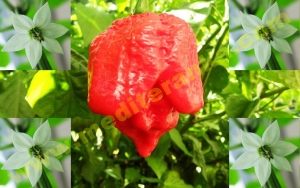
The Trinidad scorpion Butch T pepper is a Capsicum chinense cultivar that is among the most piquant peppers. It is derived from the Trinidad moruga scorpion. The "scorpion" peppers are referred to as such because the pointed end of the pepper is said to resemble a scorpion's stinger. The Trinidad scorpion Butch T pepper was, for three years, ranked as the most pungent (hot) pepper in the world, according to Guinness World Records with 1,463,700 Scoville heat units, officially ranking it the hottest pepper in the world at that time. In 2012, Guinness World Records recognized the Carolina Reaper as the hottest pepper in the world, peaking at approximately 2,200,000 SHU. Butch T has unusual color changes, the fruits color sequence is peculiar in that after starting green they go black, then yellow-orange, and finally red.
Japanese laurel
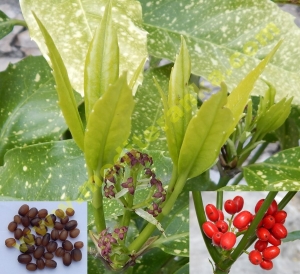
Japanese laurel (Aucuba japonica), commonly called spotted laurel, Japanese aucuba, is a shrub (1–5 m). This is the species of Aucuba commonly seen in gardens, often invariegated form. The leaves are opposite, 5–8 cm long and 2–5 cm wide. Aucuba japonica are dioecious, they have separate male and female plants. The flowers are small, 4–8 mm diameter, with four purplish-brown petals, the fruit is a red berry approximately 1 cm in diameter, which is avoided by birds. This plant is valued for its ability to thrive in the most difficult of garden environments, dry shade. It also copes with pollution and salt-laden coastal winds. It is often seen as an informal hedge, but may also be grown indoors as a houseplant. Today numerous cultivars are available from garden centres. The most popular cultivar is 'Variegata' (in offer), with yellow spots on the leaves.
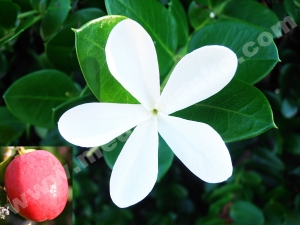
Natal plum
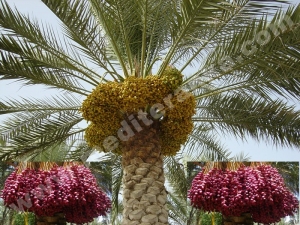
Date palm